13th March, 2026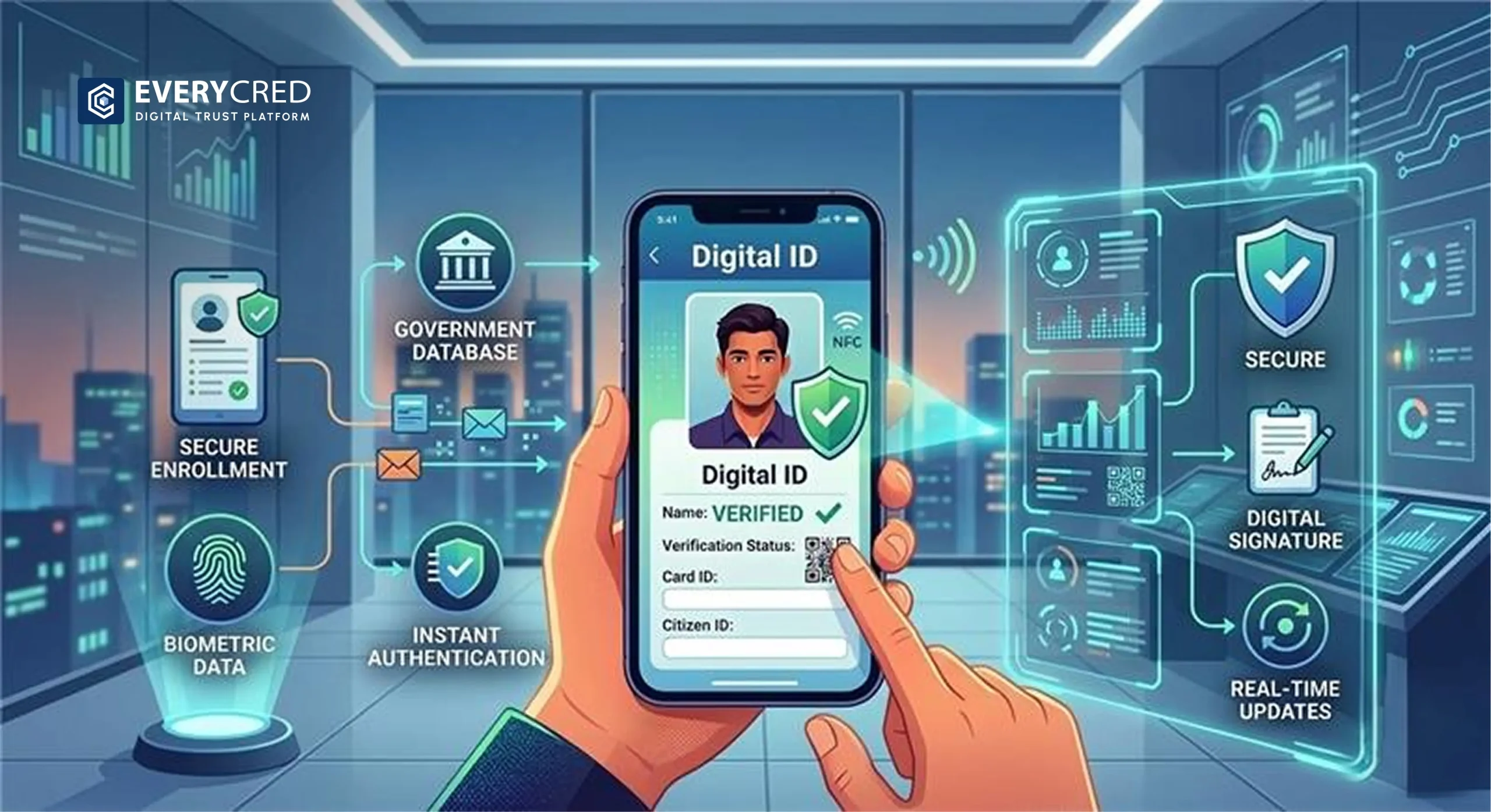
- Why are fake officer IDs a serious problem?
- How do digital ID cards improve field security?
- How does digital identity verification work in the field?
- Where can police use digital ID cards?
- Why are printed police ID cards not enough?
- What should a good police digital ID system include?
- How can police departments start using digital ID cards?
- What should police teams avoid?
- What do people often get wrong about digital ID cards?
- How is this better than manual ID checks?
- What should police compare before choosing a solution?
- How can teams evaluate the right fit?
- Ready to secure police field verification?


Digital ID cards are secure digital credentials that help police departments verify whether an officer’s identity is real, valid, and current.
Instead of relying only on printed cards, departments can issue digital ID cards that can be checked through a mobile device, QR code, NFC, or a secure verification system. This makes identity checks faster and harder to fake.
For police teams, this is important because field trust matters. A fake officer ID is not just an admin issue. It can become a security risk very quickly.
Why are fake officer IDs a serious problem?
Fake officer IDs can create real danger on the ground.
Someone using a false police identity may try to enter restricted areas, approach citizens, gain access to sensitive spaces, or misuse the authority linked to a uniform or badge. Even one fake ID incident can damage trust and create legal and operational problems.
Printed ID cards are easier to copy, tamper with, or misuse. If there is no live verification layer behind the ID, field teams may have no fast way to know whether the card is genuine.
That is why police departments now need stronger digital identity verification, not just better card design.
How do digital ID cards improve field security?
Digital ID cards improve field security by making officer identity easier to verify in real time.
If an officer’s credential is issued through a secure digital system, they can be checked instantly in the field. That check can confirm whether the ID is active, who it belongs to, what unit the officer belongs to, and whether the credential has been revoked or updated.
This is much stronger than looking at a printed card and trusting what is written on it.
A digital ID card can also reduce manual confusion. Instead of depending only on visual inspection, departments can use mobile-based digital identity verification to confirm authenticity in seconds.
How does digital identity verification work in the field?
In simple terms, a digital ID card is linked to a secure identity record.
When someone scans the QR code, taps an NFC-enabled card, or checks the credential through a secure app, the system verifies whether the identity is valid. It can also confirm if the credential is still active and approved for use.
This helps in field situations where speed matters.
For example, if a police officer is on duty at a checkpoint, event site, station entry point, or secure building, the ID can be verified quickly without depending only on visual judgment.
The real value is not only digitization. The real value is live trust.
Where can police use digital ID cards?
There are many practical use cases.
One clear use case is field verification. If a senior officer, visiting official, or special unit member arrives on-site, teams can verify identity quickly before granting access or cooperation.
Another use case is station and office entry. Instead of checking printed ID cards manually, departments can use digital identity verification to confirm who is entering a restricted zone.
It is also useful during inter-department coordination. If officers are working across units, districts, or task forces, digital ID cards can make identity checks faster and more reliable.
This also helps during public-facing duties, where citizen trust is important. If police identity can be verified properly, it reduces the risk of impersonation.
Why are printed police ID cards not enough?
Printed cards still have value, but on their own, they are not enough for modern field security.
A printed card can be copied, edited, stolen, or used after a role change. In many cases, the card may still look valid even when the person’s status has changed.
That creates risk.
A digital ID system adds live verification. It helps confirm whether the person is still active, whether the credential is original, and whether the department still recognizes it.
This is especially important in fast-moving field situations where manual checking is weak.
What should a good police digital ID system include?
A good system should do more than show an ID on a screen.
It should support secure issuance, live verification, role-based identity control, and easy field access. It should also make it simple for authorized teams to verify an officer’s identity without delay.
Useful features may include:
- QR-based verification
- NFC-enabled identity checks
- real-time status validation
- revocation control
- audit trail of verification events
- secure mobile access
- role or unit mapping
- controlled backend management
The goal is simple: make identity easy to trust and hard to misuse.
How can police departments start using digital ID cards?
The best way to begin is with one clear field problem.
Do not try to digitize every identity workflow at once. Start with a high-risk area where fake IDs, weak verification, or access confusion already create problems.
This could include:
- checkpoint verification
- station entry
- temporary duty verification
- inter-unit officer checks
- event security access
After selecting the use case, define who will receive digital ID cards, who will verify them, and how checks will happen in the field.
Then run a pilot.
Track simple outcomes like verification speed, field usability, access control quality, and reduction in manual checking errors. If the pilot works well, expand from there.
What should police teams avoid?
One common mistake is treating digital ID cards like a visual replacement for plastic cards.
That is too narrow. The real value comes from secure digital identity verification, not just a digital card image.
Another mistake is making the system hard to use.
If field teams need too many steps to verify an ID, adoption will be low. The process should be quick, clear, and mobile-friendly.
Some departments also forget revocation control.
If a credential cannot be updated or revoked quickly, the system becomes weak. A strong digital ID setup must support live status updates.
Another problem is poor backend control. If identity issuance is not governed properly, trust breaks at the source.
What do people often get wrong about digital ID cards?
Some people think digital ID cards are only useful for convenience.
That is not true. Their bigger value is security.
Some also think a digital card is enough on its own. It is not. Without secure verification behind it, a digital card can still be misused.
Another misunderstanding is that these systems are only for large agencies.
That is also not true. Police departments can start with one unit, one location, or one field workflow and grow from there.
The smartest approach is not “go big.” It is “start where the risk is highest.”
How is this better than manual ID checks?
Manual ID checks depend too much on appearance.
A printed card may look real even if it is fake, expired, stolen, or no longer valid. That makes field verification weak, especially when teams are under pressure.
Digital identity verification adds a stronger layer of proof.
It helps teams check if an ID is active, trusted, and linked to the right person. That creates better security and better confidence in the field.
What should police compare before choosing a solution?
Police teams should compare real capability, not just design or presentation.
Look at:
- ease of field verification
- speed of identity checks
- QR or NFC support
- revocation and update control
- backend admin security
- audit trail visibility
- mobile usability
- ability to work across locations or units
The right solution should fit daily police work, not just look good in a demo.
How can teams evaluate the right fit?
A simple way to evaluate digital ID card solutions is to focus on five things.
First, does it solve the fake officer ID problem?
Second, can teams verify identity quickly in the field?
Third, can the department control issuance, updates, and revocation properly?
Fourth, is it easy for officers and verification staff to use?
Fifth, can it scale after a pilot?
If the answer is yes across all five, the solution is worth serious attention.
Ready to secure police field verification?
If your department is dealing with fake officer IDs, weak field checks, or slow manual verification, digital ID cards can offer a more secure and practical way forward.
EveryCRED has already implemented secure digital credentials and identity verification solutions in real-world environments. That means police teams can move ahead with a solution approach that is proven, practical, and built for trust.
If you want to improve field security, strengthen officer identity verification, and reduce the risk of fake IDs, connect with EveryCRED for a focused discussion and a live demo.