30th June, 2026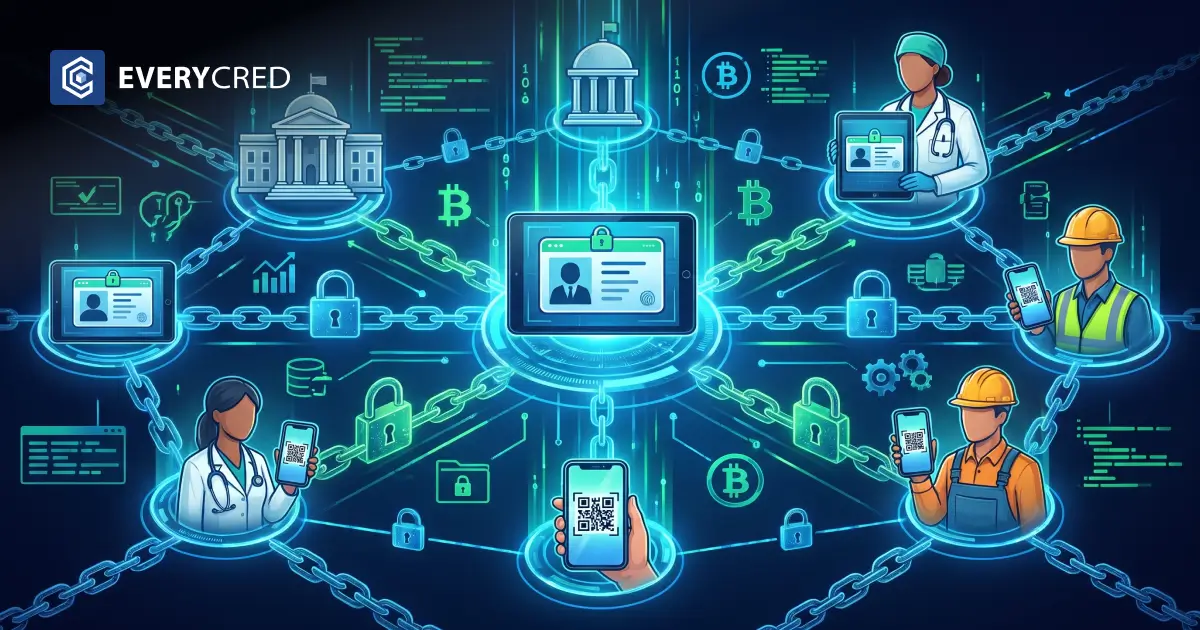
- Why Registry Lookups Leave State Licensing Boards Exposed
- What a Digital Identity Platform Does for License Issuance
- Real-Time Credential Status Closes the Suspension Gap
- License Renewal Modernization Without Reprinting a Single Card
- Standards and Procurement for a Digital Identity Platform in State Agencies
- How We Deploy a Digital Identity Platform for Licensing Boards
- Conclusion
- FAQs


A digital identity platform enables a state licensing board to issue professional licenses as verifiable credentials that employers can verify in seconds and that reflect the real-time status of the credential. When a board suspends a license today, every future verification shows it as invalid within seconds. That single capability closes the gap that phone calls and registry lookups leave open. Most boards still verify by phone or a website lookup, which can lag a status change by days. A digital identity platform replaces that delay with cryptographic proof, allowing an employer to validate it without calling anyone. This guide explains how license issuance, professional license verification, and instant revocation work on one system.
Key Takeaways
- Manual credential verification costs $15 to $25 per check; a digital identity platform reduces that to under $0.10 per check.
- Real-time credential status propagates a suspension to every future verification within seconds, closing the “valid yesterday, suspended today” gap.
- A licensed professional presents a QR-based credential that employers verify in under 10 seconds without contacting the state licensing board.
- License renewal modernization becomes a status update, not a reprint or a manual registry edit.
- US agencies can procure through Carahsoft vehicles, including NASA SEWP V and ITES-SW2, with no new competitive procurement.
Why Registry Lookups Leave State Licensing Boards Exposed
Registry lookups report the last recorded status, not the current one. A licensee suspended on Monday can appear active in a cached lookup or a printed certificate on Tuesday. Employers in regulated fields act on that stale record.
The cost adds up quickly. Manual credential verification runs $15 to $25 per check, according to industry baselines, and each check ties up staff time. A single state licensing board fielding thousands of verification calls a year carries a large, avoidable operating cost.
The fraud exposure is worse. AI-generated forged documents grew 311% from Q1 2024 to Q1 2025, and the entry cost for document fraud is under $30. A PDF license or a wall certificate is trivial to alter and impossible for an employer to authenticate on sight. This is the core problem a modern platform solves, and it is why boards are moving toward public sector credentials built on cryptographic proof.
What a Digital Identity Platform Does for License Issuance
A digital identity platform is a system that issues, stores, and verifies tamper-proof digital credentials using cryptographic signatures and open standards. The state licensing board acts as the issuer, the licensed professional is the holder, and the employer is the verifier. Each role uses one connected system.
The board issues each professional license as a verifiable credential signed with its private key. The licensee stores that credential in a secure wallet. An employer scans a QR code to run professional license verification against the board’s public key.
The verification resolves without a database call or a phone call. Any alteration to the credential breaks the signature and fails the check automatically. For a broader selection framework, boards evaluating vendors can review our guide on choosing a government identity platform.
Real-Time Credential Status Closes the Suspension Gap
Real-time credential status is the feature that separates a credential platform from a registry. When a board changes a license status, the revocation registry updates, and every subsequent verification reflects the change within seconds.
Consider a concrete case. The Nevada engineering board suspended a professional engineer after a safety finding on June 3. An employer verifying that an engineer on June 4 sees an invalid credential immediately, because the check queries live status, not a cached page. The suspended engineer cannot present a valid-looking license.
This solves the “valid yesterday, suspended today” problem directly. Registry lookups and printed certificates cannot do this. The revocation propagates to credentials already saved in the holder’s wallet, so an old copy does not pass. Boards can read more on how credential revocation works at the verification layer.
License Renewal Modernization Without Reprinting a Single Card
License renewal modernization turns a print-and-mail cycle into a status update. The board updates the credential’s validity period in the issuer portal, and the holder’s wallet reflects the new expiry automatically. No new card ships, and no registry row needs a manual edit.
Renewal errors also drop. When renewal is a signed status update, the credential either shows current or it does not. There is no window where a renewed licensee still appears expired in a lagging system.
Verification works offline as well. Cached cryptographic signatures let an employer confirm a license at an inspection site or a rural facility without network coverage. This matters for boards whose licensees work in the field. The result is faster professional license verification and fewer support calls to board staff. Boards comparing workflows can review automated license verification against the manual process they run today.
Standards and Procurement for a Digital Identity Platform in State Agencies
Standards compliance is non-negotiable for a state licensing board. A credential platform should meet the W3C Verifiable Credentials Data Model 2.0 for interoperability and NIST Special Publication 800-63-4, the identity assurance guidance finalized by NIST in July 2025. These standards let a license issued in one system be verified in any compliant system.
Procurement is the other barrier boards raise first. A digital identity platform available on existing contract vehicles removes the need for a new competitive procurement cycle. US agencies can procure through Carahsoft on NASA SEWP V, ITES-SW2, NASPO ValuePoint, and OMNIA Partners.
Integration should not require replacing the board’s licensing system. A REST API adds the credential layer to an existing licensing database with no front-end changes. Employers verifying a license need only a QR scanner, which enables instant verification with no app to install.
How We Deploy a Digital Identity Platform for Licensing Boards
We deployed digital officer credentials for Raigad Police, reducing verification time from 30 minutes to under 10 seconds and cutting administrative overhead by 85%. The same architecture applies to a state licensing board issuing professional licenses. Our platform issues each license as a verifiable credential, checks real-time credential status at every verification, and integrates with your existing licensing database via REST API. Statewide deployment runs 36 weeks, with a pilot operational by week 20. US agencies can procure through NASA SEWP V and ITES-SW2 without a new competitive procurement. Book a demo to see license issuance and professional license verification in a live walkthrough.
Conclusion
State licensing boards lose time and credibility to verification methods that report stale status. A digital identity platform fixes this at the system level. Licenses are issued as verifiable credentials, employers run professional license verification in seconds, and real-time credential status invalidates a suspended license the moment the board acts.
License renewal modernization removes reprint cycles and manual registry edits. Standards compliance with W3C and NIST keeps credentials interoperable and audit-ready. Existing contract vehicles remove the procurement barrier that stalls most modernization projects. Boards that deploy this infrastructure now stop presenting stale license data and start proving current status on demand.
FAQs
What is a digital identity platform for a state licensing board?
It is a system that issues professional licenses as tamper-proof, verifiable credentials and verifies them instantly against live credential status.
How does professional license verification work without calling the board?
An employer scans the license credential’s QR code, and the platform validates the cryptographic signature against the board’s public key in seconds.
How fast does a suspended license show as invalid?
Real-time credential status updates the revocation registry within seconds, so every verification after a suspension returns an invalid result immediately.
Can a state licensing board keep its existing licensing database?
Yes, a REST API adds the credential layer to the current system with no front-end changes and no rip-and-replace.
How does license renewal modernization change the renewal process?
Renewal becomes a signed status update in the issuer portal, so no card is reprinted and no registry row is edited manually.