21st April, 2026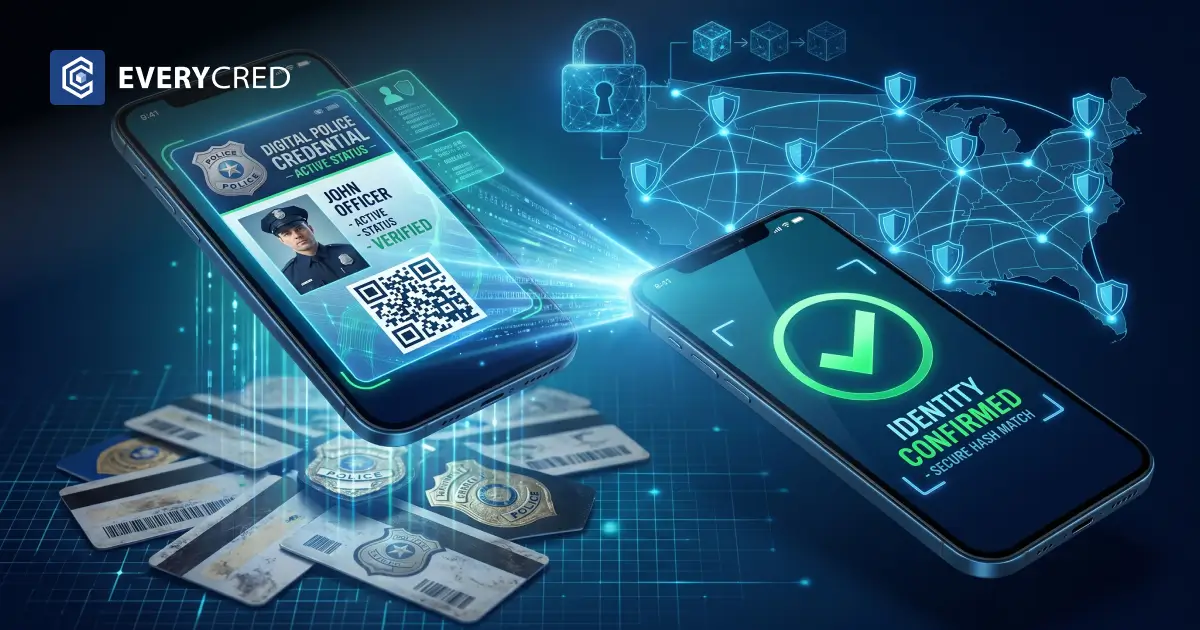


Law enforcement agencies require precise and highly secure identification methods to operate effectively. Currently, nearly 18,000 independent police departments operate nationwide. Each department designs and issues distinct physical badges and cards for its personnel.
This severe lack of standardization allows malicious individuals to manufacture fake identity cards easily. Officers struggle to verify the credentials of personnel from other jurisdictions during joint operations, traffic stops, or perimeter security checks.
Upgrading to digital ID cards solves this critical security flaw. Agencies use digital identity verification to confirm an officer’s active employment status instantly. This technological process removes the operational risks associated with outdated physical cards. The transition to cryptographic mobile credentials ensures a unified, highly secure standard for all law enforcement interactions.
Physical Credentials Fail to Stop Impersonators
Physical cards lack dynamic security updates. Forgers routinely replicate barcodes, magnetic stripes, and complex holographic overlays. Modern printing technology makes creating unauthorized credentials simple and inexpensive.
- Lack of Uniform Standardization: Departments use different ID card printers, software, and visual designs. An officer from one county cannot visually authenticate a physical card presented by an officer from another state or county.
- Severe Counterfeit Risks: Individuals purchase professional card printers online to create fake identity cards. Security experts continually emphasize the vulnerability of physical police IDs in modern law enforcement environments. Visual inspection alone cannot detect high-quality counterfeits.
- Delayed Field Verification: Officers must radio dispatch to confirm an unknown individual’s identity. Dispatchers then call the HR department of the other jurisdiction. This manual process delays response times and complicates field verification protocols.
Agencies must implement modern solutions to stop fake police credentials and maintain absolute security in restricted crime scene zones.
How Digital ID Cards Secure Field Operations
Digital ID cards provide immediate, cryptographically secure proof of an officer’s identity. These systems rely on mathematics and established software protocols rather than physical printing materials.
- Cryptographic Data Hashes: Administrators issue each digital card with a unique cryptographic code. This code ties directly to the officer’s specific department, rank, and training certifications.
- Instant Scanning Protocols: Officers present a secure QR code on their mobile device. A verifying officer or citizen scans this code to conduct instant digital identity verification. The software instantly checks the cryptographic signature against a secure registry.
- Tamper-Proof Systems: Blockchain technology and decentralized networks prevent anyone from altering the credential data. The system rejects any modified information immediately.
Departments rely on accurate digital identity proofing to establish operational trust between interacting agencies. Reliable credential verification ensures only authorized, active personnel access to sensitive evidence or secure facilities.
Instant Validation Across Jurisdictions
Multi-agency task forces and disaster response scenarios require rapid personnel identification. Digital ID cards operate on interoperable software platforms that communicate seamlessly.
- Establishing Interagency Trust Digital systems standardize the verification process across all independent departments. The verifying software reads the cryptographic signature regardless of which department issued the credential.
- Mobile Wallet Integration Officers store their secure credentials directly on encrypted company smartphones. State governments already support mobile formats for official use, as seen when Virginia launched a mobile ID accepted by law enforcement.
- Reliable Offline Verification Officers frequently work in areas with poor cellular reception. Cryptographic keys allow verification software to authenticate credentials locally on the device without requiring an active internet connection.
This modernization directly aligns with broader government transformation initiatives aiming for paperless, highly secure administrative environments.
Real Time Revocation and Status Management
Physical cards remain visually active until a supervisor physically confiscates them. This requirement creates severe security vulnerabilities when officers resign, retire, or face disciplinary suspension. Former employees often claim they lost their physical cards to keep them.
- Instant Access Updates: Administrators revoke digital ID cards immediately from a central, secure dashboard. The change registers on the network instantly.
- Dynamic Status Indicators: A scanned digital ID displays the officer’s exact current status. The verifying application clearly shows whether the individual is active, suspended, or retired.
- Strict Access Control: Revoked credentials automatically fail all digital identity verification checks at secure checkpoints. The system alerts the verifying officer that the credential is no longer valid.
Implementing these stringent administrative controls helps agencies prevent fraud committed by former employees or impersonators.
The strategic use of verifiable credentials ensures the data presented during field verification is always accurate and current.
Implementing Secure Field Verification with EveryCRED
Police agencies require highly reliable software systems for field verification. We build blockchain-backed credentialing solutions designed specifically for stringent government security requirements. EveryCRED issues tamper-proof digital identities that integrate directly with your existing department’s human resources databases.
Command staff can manage all officer credentials from a secure administrative dashboard. Administrators can issue new credentials, update ranks, and revoke access instantly. Our platform standardizes the verification process across different jurisdictions to eliminate the threat of fake identity cards entirely.
You can read additional digital credential insights in our resources section to understand the technical implementation. Contact our team to schedule a software demo and secure your department’s identity management protocols today.
Conclusion
Law enforcement agencies must abandon outdated physical plastic cards. Transitioning to secure mobile credentials eliminates the persistent threat of impersonation and unauthorized access. Digital systems provide the exact verification tools officers require during high-stakes field operations. Adopting these advanced software technologies ensures secure, highly efficient, and completely reliable identification across all jurisdictions and task forces.
FAQs
What are digital ID cards?
They are secure, cryptographic mobile credentials that replace physical plastic badges for official identity verification.
How does digital identity verification work?
Officers scan a secure QR code to instantly confirm an individual’s department, rank, and active status.
Can someone forge these digital credentials?
No. Cryptographic signatures and blockchain technology make the data tamper-proof and impossible to duplicate.
What happens if an officer loses their phone?
Administrators revoke the credential instantly. The encrypted app also requires strict biometric authentication to open.
Do these software systems work offline?
Yes. Officers verify cryptographic signatures locally on their devices without needing an active internet connection.