29th April, 2026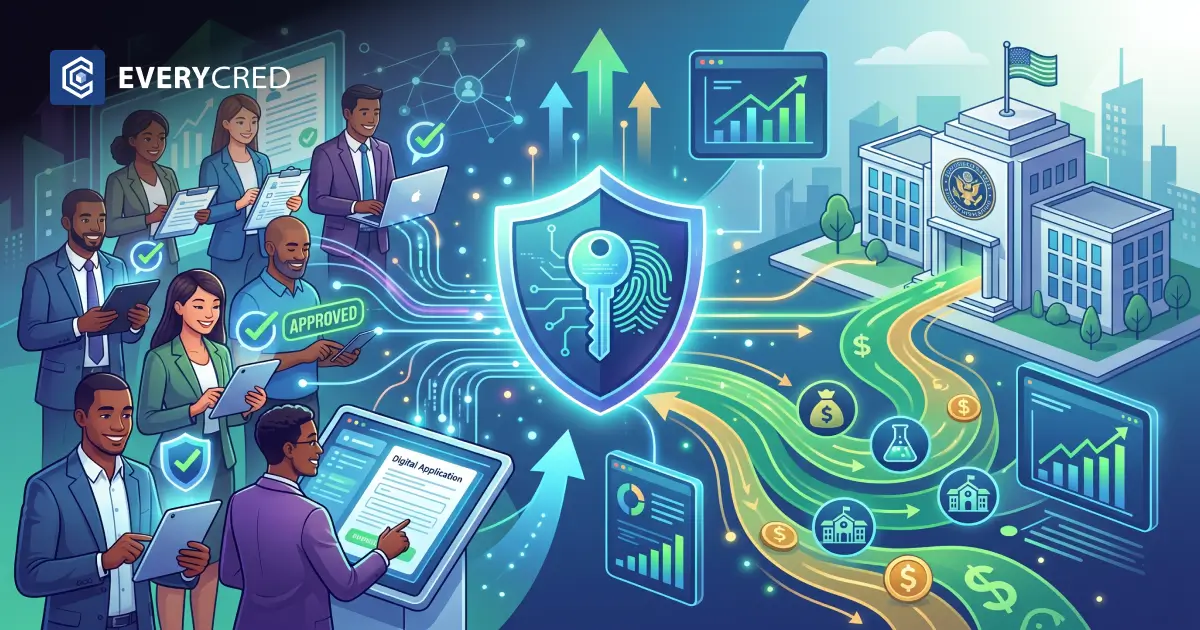
- The Multi-Billion Dollar Leak in State and Federal Funding
- Outdated Identity Infrastructure Fails Beneficiary Verification
- Deploying Cryptographic Proofs for Instant Identity Validation
- Key Operational Upgrades for Finance Departments
- Security Standards and Compliance Mandates
- Eliminating Synthetic Identity Fraud at Scale
- Secure Your Agency Funding Portals
- Conclusion
- FAQS


Government agencies distribute billions of dollars through funding programs annually. These programs support small businesses, agricultural development, and public infrastructure. Fraud in these programs causes significant financial losses. Criminals exploit weaknesses in application processes to claim funds illegally. Finance departments require exact beneficiary verification to stop improper payments. Implementing secure credentials solutions stops unauthorized individuals from accessing restricted capital. Digital identity verification provides a definitive method to confirm applicant details. Finance teams must replace paper-based checks with cryptographic validation to secure the public treasury.
The Multi-Billion Dollar Leak in State and Federal Funding
The scale of improper payments requires immediate intervention from finance departments. Agencies rely on fragmented databases to confirm citizen identities. This decentralized approach creates verification gaps. Fraudsters use synthetic identities to bypass standard checks.
- Financial Impact: The federal government loses an estimated $233 billion to $521 billion annually to fraud, according to a recent Government Accountability Office report. This massive loss impacts the ability to fund legitimate civic projects.
- Application Fraud: Individuals submit false tax records or residency documents. They alter dates and financial figures on standard forms.
- Identity Theft: Criminals use stolen Social Security Numbers to file claims. They intercept legitimate funds directed to actual citizens.
- Synthetic Identities: Bad actors combine real and fake data to create new, untraceable profiles. These profiles bypass standard credit bureau checks.
- Coordinated Attacks: Organized crime rings target specific grant programs simultaneously. They flood application portals with thousands of submissions to overwhelm review staff.
- Double Dipping: Applicants apply for the same funds across different state jurisdictions. Disconnected databases fail to flag duplicate entries.
Secure credentials solutions address these exact vulnerabilities. They tie digital proof directly to the verified individual. The technology prevents criminals from submitting multiple applications under assumed names.
Outdated Identity Infrastructure Fails Beneficiary Verification
Government departments still use paper documents and basic PDF uploads for identity proofing. These formats lack cryptographic security. Anyone with basic software can alter a PDF bank statement or utility bill.
- Manual Review Delays: Human operators must cross-reference documents across state and federal databases. This takes days or weeks per application.
- Data Silos: Information does not flow securely between different departmental agencies. A finance department cannot easily verify a driving license with the transportation department.
- High Error Rates: Manual data entry leads to clerical errors and false approvals. Reviewers suffer from fatigue when checking thousands of identical forms.
- Physical Document Storage: Departments maintain massive warehouses of paper records. Retrieving past applications for audits requires significant physical labor.
Agencies need to adopt modern frameworks. Upgrading government verification systems removes the human error component. Organizations must transition to automated digital identity frameworks. The National Institute of Standards and Technology outlines strict rules for digital identity. Their Special Publication 800-63A guidelines mandate rigorous identity proofing and enrollment procedures to prevent synthetic fraud.
Deploying Cryptographic Proofs for Instant Identity Validation
Verified credentials operate on cryptographic principles. These digital records contain tamper evident seals. The issuing authority signs the document digitally. The verifying party checks the signature instantly.
Cryptographic Signing
The system generates a unique mathematical hash for every document. Altering one pixel changes the entire hash. This makes forgery mathematically impossible.
Decentralized Storage
Citizens hold their own data in digital wallets. Central databases do not store mass pools of personal information. This reduces the risk of massive data breaches by hackers.
Selective Disclosure
Applicants share only the required data points. If a grant requires the applicant to be over 65, the system proves the age without revealing the exact birth date.
Immutable Ledgers
The verification network uses distributed ledgers to record issuance. The ledger proves the document status without holding sensitive data itself.
This approach requires modern identity infrastructure to function correctly. Deploying verified credentials establishes a permanent chain of trust between the citizen and the state.
Key Operational Upgrades for Finance Departments
Finance departments must integrate new verification protocols into existing application portals. The workflow changes from manual inspection to automated cryptographic validation. This transition requires specific technical capabilities.
- Applicant Enrollment: The citizen completes an identity proofing session. This involves biometric matching against authoritative government records.
- Credential Issuance: The state agency issues verified credentials directly to the applicant’s secure mobile application.
- Grant Application: The applicant submits the digital proof along with their funding request through the government portal.
- Automated Verification: The department software verifies the cryptographic signature instantly via an Application Programming Interface.
- Status Confirmation: The system checks the revocation registry to ensure the credential remains active and valid.
- API Integration: Developers connect the verification engine directly to the existing grant management software. This requires zero changes to the front-end user interface.
This process eliminates the need for manual document inspection. Agencies achieve total certainty regarding beneficiary eligibility. Exploring various credentials solutions helps departments identify the right integration method for their specific funding portals.
Security Standards and Compliance Mandates
Distributing public funds requires strict adherence to privacy laws and security mandates. Departments must protect Personally Identifiable Information during the entire grant lifecycle.
Audit Trails
Every verification event generates an immutable record. Auditors can review the exact time and date a credential was verified. This ensures transparency in fund allocation.
Revocation Capabilities
Issuing authorities can revoke a credential instantly. If an agency detects fraud, they update the ledger. The verifying department sees the invalid status upon the next check.
System Interoperability
Verification systems must communicate across different state and federal boundaries. Standardized formats ensure that a credential issued by a state vehicle department is readable by a federal agriculture grant portal.
Data Minimization
Agencies collect only the specific data required for the grant. They do not store excess citizen information on vulnerable servers.
Finance departments should consult a digital credentials checklist to track compliance requirements during implementation. Understanding the applications of verifiable credentials guarantees that agencies build scalable security models.
Eliminating Synthetic Identity Fraud at Scale
Synthetic identity fraud presents the largest threat to public funding. Criminals create thousands of automated applications using artificial intelligence. Manual reviewers cannot keep up with the volume of machine-generated applications.
- Automated Defense: Credential solutions block automated bot applications. They require cryptographic proof tied to a real person.
- Liveness Detection: Enrollment processes require active participation from the user. This prevents the use of stolen static photographs or video replays.
- Cost Reduction: Stopping fraud before disbursement saves administrative recovery costs. Investigating stolen funds requires extensive legal and police resources.
- Instant Disbursement: Legitimate citizens receive funds faster. Automated checks remove the processing backlog caused by fraudulent applications.
Utilizing trust credentials ensures that only legitimate citizens access designated capital. Agencies can scale their programs rapidly without scaling their fraud risk.
Secure Your Agency Funding Portals
Securing public funds requires robust digital infrastructure. EveryCRED provides enterprise-grade credentials solutions for government agencies. We build automated verification workflows that integrate directly into your existing grant portals. Our platform issues and authenticates verified credentials instantly. We eliminate manual document reviews and block synthetic identity fraud. Our technology ensures absolute compliance with federal digital identity standards. You can secure your funding disbursement process today. Schedule a demo with our team to configure your custom verification workflow. Visit EveryCRED to start.
Conclusion
Government finance departments face unprecedented levels of application fraud. Traditional document verification fails to stop modern synthetic identities. Implementing verified credentials provides cryptographic certainty for every applicant. Upgrading to secure credentials solutions protects public capital and ensures funds reach the correct beneficiaries.
FAQS
What are credentials solutions for grants?
They are digital systems that use cryptography to authenticate applicant identities instantly during the funding process.
How do verified credentials prevent fraud?
Verified credentials use digital signatures that are impossible to forge, ensuring the applicant is legitimate.
Why do finance departments need automated verification?
Automated verification eliminates human error, speeds up processing times, and blocks sophisticated synthetic identity attacks efficiently.
What makes digital identity proofing secure?
Digital identity proofing relies on cryptographic hashes and decentralized storage to protect sensitive citizen data completely.
How fast is a verifiable credential check?
The system verifies the cryptographic signature in milliseconds, allowing instant approval for legitimate government grant applications.