5th February, 2026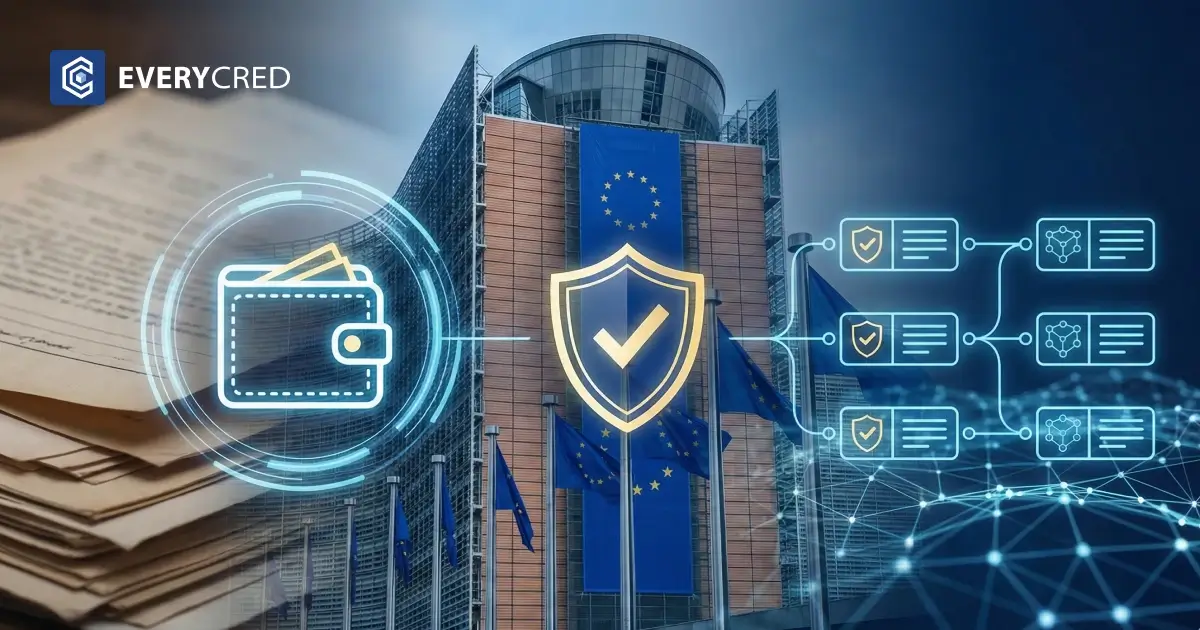


By late 2026, the European digital market will undergo its most significant transformation since the introduction of GDPR. The full implementation of eIDAS 2.0 and the mandatory rollout of the European Digital Identity (EUDI) Wallet will fundamentally change how governments interact with citizens and businesses.
For government agencies, this is not merely a compliance update; it is a structural shift in digital identity in the public sector within Europe.
The era of scanning physical documents and uploading static PDFs is ending. The future lies in cryptographically secure, instantly verifiable credentials.
Agencies that prepare now will reduce bureaucratic friction and eliminate fraud. Those who delay risk obsolescence in a rapidly integrating digital Europe.
The 2026 Mandate: From Digitization to Verification
The European Commission has set a clear deadline. By 2026, every Member State must make a digital identity wallet available to its citizens. More importantly, public service providers are mandated to accept these wallets for authentication and document sharing. This regulation aims to harmonize digital identity in Europe, allowing for seamless cross-border interactions.
Currently, digital identity in the public sector within Europe is fragmented. A citizen’s digital ID in France does not easily translate to a service in Germany. The new framework solves this by standardizing the technical architecture.
However, the success of this framework depends entirely on the underlying technology of credential verification. Agencies must move away from manual checks and adopt automated systems that can instantly validate the authenticity of a digital claim.
Verifiable Credentials vs. Digital Files
To navigate this shift, public sector leaders must understand the difference between a digital file and a verifiable credential. A digital file, such as a PDF scan of a diploma or a tax clearance certificate, is easily forged. It requires a human to look at it, trust it, and perhaps call the issuing authority to confirm it. This manual process is the bottleneck of current digital identity in the public sector within Europe.
In contrast, verifiable credentials are tamper-proof digital data objects. They are cryptographically signed by the issuer. When a citizen presents a verifiable credential, such as proof of residency or a university degree, the receiving agency’s system can instantly verify three things without human intervention:
- Issuer Authenticity: Did a legitimate authority (e.g., the Ministry of Interior) issue this?
- Integrity: Has the data been altered since issuance?
- Status: Is the credential still valid, or has it been revoked?
This automated credential verification is the backbone of the new trust ecosystem. It allows digital identity in Europe to function with the same level of assurance as physical presence and physical documents, but with the speed of the internet.
For a deeper dive into the technical differences, read our guide on Verifiable Digital Certificates vs. Digital Certificates.
High-Impact Use Cases for 2026
The adoption of verifiable credentials opens up immediate opportunities for efficiency in government operations.
1. Cross-Border Educational and Professional Mobility
In 2026, a nurse trained in Spain will be able to present their credentials to a hospital in Belgium via their EUDI wallet. The Belgian health authority will perform instant credential verification against the Spanish issuer’s public key. This eliminates months of waiting for physical transcripts and notarized translations, directly facilitating the free movement of labor, a core tenet of digital identity in Europe.
2. Streamlined Public Procurement
Corporations bidding for government contracts currently submit volumes of paperwork to prove their legal status, solvency, and lack of criminal record. By adopting digital identity in the public sector within Europe, agencies can request these proofs as verifiable credentials. A company can share a “Legal Person” credential that instantly proves their eligibility, reducing the tender cycle from weeks to days.
3. Social Security and Entitlements
Fraud in social welfare often stems from the inability to verify data in real-time. With verifiable credentials, a citizen can prove their eligibility for a benefit (e.g., “Student Status” or “Disability Status”) without exposing unnecessary personal data. This privacy-preserving approach is a key requirement of the new regulations governing digital identity in Europe.
Learn more about how we enable these scenarios on our Public Sector Solutions page.
The Trust Architecture: Privacy by Design
European regulators are prioritizing privacy. The new digital identity in the public sector within Europe must support “Selective Disclosure.” This means a citizen can prove they are over 18 without revealing their exact date of birth.
This is achieved using advanced cryptographic techniques like Zero-Knowledge Proofs (ZKPs). Unlike traditional databases that create honey pots for hackers, verifiable credentials are stored in the user’s wallet. The government agency acts as a verifier, not a data hoarder. This architecture minimizes GDPR liability for the agency while maximizing trust.
According to the European Commission’s strategy on digital identity, this user-centric model is non-negotiable for 2026. Trust is no longer about centralized security perimeters; it is about decentralized, cryptographic verification.
Implement the Change: Strategies for Agencies
Transitioning to this new model requires a strategic approach to infrastructure. Agencies cannot simply “update” their legacy SQL databases to handle digital identity in the public sector within Europe. They need a dedicated verification layer.
Steps for Readiness:
- Audit Current Data Flows: Identify where physical documents or static PDFs are currently used for credential verification.
- Adopt W3C Standards: Ensure your systems are compatible with W3C Verifiable Credentials and Decentralized Identifiers (DIDs). Proprietary formats will fail the interoperability test for digital identity in Europe.
- Deploy Verification Nodes: Install infrastructure that can cryptographically challenge and verify a wallet’s contents.
Agencies that rely on outdated methods will face increasing operational costs and legal challenges as the 2026 deadline approaches. The volume of credential verification requests will explode as citizens adopt digital wallets. Automated systems are the only viable solution to handle this scale.
For insights on upgrading your infrastructure, see our analysis of Government-Grade Credentialing Choices.
Secure Your Agency’s Future with EveryCRED
As the 2026 deadline for eIDAS 2.0 looms, the gap between current legacy systems and the required digital infrastructure is widening. Government agencies need a partner that understands the complexity of digital identity in the public sector within Europe.
EveryCRED provides a comprehensive platform designed specifically for this new era of trust. Our technology enables you to issue and verify tamper-proof credentials that fully comply with EU regulations and W3C standards.
Why EveryCRED is the partner of choice for Government Agencies:
- W3C & eIDAS Alignment: Our architecture is built on Decentralized Identifiers (DIDs) and verifiable credentials, ensuring seamless interoperability across European borders.
- Government-Grade Security: We utilize blockchain technology to create an immutable audit trail for every credential verification, eliminating fraud and ensuring absolute data integrity.
- Privacy-First Verification: Our platform supports Zero-Knowledge Proofs, allowing your agency to verify citizen eligibility without over-collecting sensitive personal data, keeping you compliant with GDPR.
- Seamless Integration: EveryCRED’s API-first approach allows you to overlay credential verification capabilities onto your existing portals without ripping and replacing your core IT systems.
Digital identity in Europe is evolving. Your agency’s infrastructure should too.
Don’t wait for the mandate to become a crisis. Contact EveryCRED today to pilot your verifiable credential strategy and lead the transformation in public service delivery.
Conclusion
The year 2026 marks the point of no return for digital identity in the public sector within Europe. The transition to the EUDI wallet and verifiable credentials offers a unique opportunity to rebuild trust between the state and the citizen. By automating credential verification and embracing the standards of digital identity in Europe, government agencies can deliver services that are faster, more secure, and privacy-preserving. The technology is ready; the regulation is set. The only remaining variable is your agency’s readiness to act.