23rd February, 2026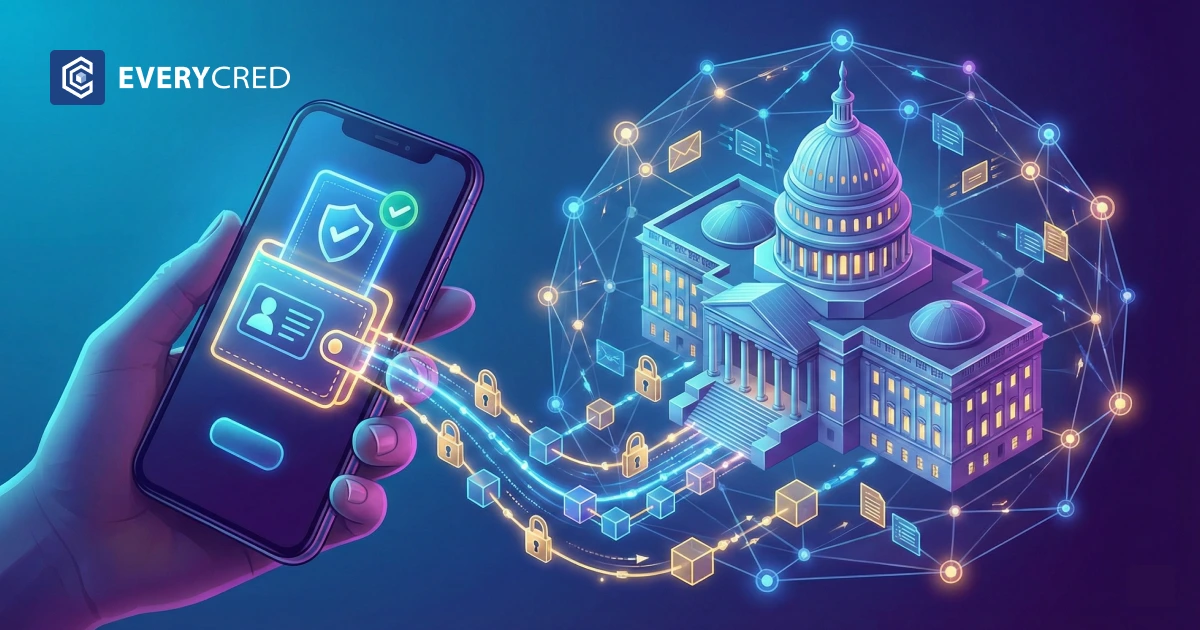
- Federal Directives Require Cryptographic Proof for Citizen Portals
- The Core Infrastructure of Modern Authentication
- Legacy Systems Versus 2026 Authentication Standards
- Interoperability Drives Department-Wide Adoption
- Reducing Fraud in Public Sector Programs
- Implementing EveryCRED for Secure Agency Operations
- Conclusion


Government agencies face strict requirements for authentication in 2026. Program heads must implement secure government digital access to protect citizen data and prevent fraud. This process requires moving away from centralized databases and adopting cryptographic methods.
Modern frameworks rely heavily on a digital identity system that proves user attributes without exposing unnecessary personal information. The federal government mandates these changes to reduce security vulnerabilities across civilian and defense networks.
Program heads evaluate and deploy new infrastructure to meet these specific compliance targets. Transitioning to modern standards eliminates legacy vulnerabilities associated with static passwords and manual verification processes.
Federal Directives Require Cryptographic Proof for Citizen Portals
The Shift from Passwords to Proof
The National Institute of Standards and Technology (NIST) updated its digital identity guidelines. The SP 800-63-4 framework requires federal systems to use phishing-resistant authentication. Agencies now issue verifiable credentials to citizens. These credentials replace static passwords with cryptographic proof. A user presents a cryptographic key instead of typing a secret phrase. This method stops unauthorized access attempts originating from phishing attacks.
According to the updated NIST Special Publication 800-63B guidelines, agencies must prioritize authenticator assurance levels that rely on hardware-backed security. The adoption of these hardware-backed methods changes the user experience. The citizen registers their device with the agency once. The agency portal sends a cryptographic challenge to the device. The device signs the challenge using a private key stored in a secure enclave. The agency portal verifies the signature using the corresponding public key. This process happens in the background. It removes the human element from authentication security.
Meeting Compliance and Security Standards
Program heads evaluate new infrastructure based on specific security metrics. A decentralized network prevents a single point of failure. When an agency issues digital credentials, the citizen stores them locally on their device. This reduces the risk of mass data breaches at the agency level. If a hacker breaches a government server, they do not find a centralized repository of user passwords. They only find public keys. The private data remains with the user.
Agencies lower their risk profile and comply with federal mandates by distributing data storage across user devices. Federal compliance teams audit agencies based on their data retention policies. A distributed storage model changes the scope of these audits. Agencies no longer store large volumes of personally identifiable information. They only store the cryptographic proofs of transactions. This reduction in stored data lowers the severity of potential compliance violations. It also reduces the required budget for database encryption and monitoring tools.
The Core Infrastructure of Modern Authentication
Structuring Data for Verification
Agencies structure a digital identity using standardized data formats. The World Wide Web Consortium (W3C) establishes the core specifications for these formats. The W3C Verifiable Credentials Data Model 2.0 defines how systems express claims cryptographically. A system generates a unique identifier for the issuing agency and the receiving citizen. The issuer signs the data payload mathematically. This mathematical signature proves the origin of the document. It also proves that the data remains unaltered since the time of issuance.
The W3C model defines specific roles within the ecosystem. The issuer creates the data. The holder stores the data. The verifier requests the data. This separation of roles prevents the issuer from tracking where the holder uses the credential. If the state government issues an identification document, the state government does not receive an alert when the citizen uses that document to enter a federal building. This architecture enforces privacy at the protocol level.
Managing Access on User Devices
Citizens hold their information in a digital wallet. This software application stores cryptographic keys and credential data securely on a mobile device or computer. When a government portal requests verification, the digital wallet generates a temporary proof. The portal verifies the signature against a public registry. This process establishes secure government digital access instantly. The user does not need to fill out manual forms or wait for a human review.
The automated verification process reduces wait times for essential public services. The software requires local authentication before releasing any data. The user must provide a fingerprint, facial scan, or local PIN to unlock the application. The application then packages the requested data into a verifiable presentation. It transmits this presentation over an encrypted connection to the verifier. The verifier checks the issuer’s public key on a distributed ledger to confirm the credential’s validity. This multi-step process occurs in milliseconds.
Legacy Systems Versus 2026 Authentication Standards
Many departments still operate legacy systems. The transition to modern standards requires a clear comparison of capabilities. Program heads use these comparisons to justify budget allocations for IT modernization projects.
| Feature | Legacy Access Systems | 2026 Standard Requirements |
| Data Storage | Centralized agency servers | Decentralized ledgers |
| User Authentication | Passwords and SMS codes | Phishing-resistant cryptographic keys |
| Information Control | Agency controls all records | Citizen controls data via a digital wallet |
| Credential Format | Proprietary database entries | Standardized digital credentials |
| Verification Speed | Requires manual or batch processing | Instant cryptographic verification |
| Attack Surface | High risk of mass data breaches | Low risk due to distributed data |
Interoperability Drives Department-Wide Adoption
Preventing Vendor Lock-In
Government departments require systems that communicate with each other. A standardized digital identity prevents vendor lock-in. If the Department of Motor Vehicles issues a credential, the tax authority must read it. Open standards allow different agencies to verify the same verifiable credentials.
Departments avoid purchasing duplicate software from different vendors. They use universal protocols to request and verify data across different jurisdictions. Organizations implement digital identity verification with verifiable credentials to ensure interoperability across all public sector applications.
Ensuring Privacy Through Selective Disclosure
Citizens demand privacy when interacting with government services. A decentralized system allows selective disclosure. A citizen proves their age without revealing their exact birth date or home address. They present digital credentials that contain only the requested attributes. This approach limits data exposure. It complies with strict privacy regulations and minimizes the liability for the verifying agency. The agency collects less data, reducing the cost of securing local databases. Adopting these privacy-first models helps build trust in public services across civilian populations.
Reducing Fraud in Public Sector Programs
Stopping Synthetic Identity Creation
Fraudsters create synthetic identities using stolen data from centralized servers. Modern architecture stops this practice. Agencies verify the physical existence of a citizen and issue verifiable credentials. These credentials bind the identity to a specific device or hardware module.
A fraudster cannot copy the credentials to a new device. If they steal a phone, the hardware requires biometric confirmation to release the credential. This mechanism eliminates the use of stolen data for fraudulent benefits applications. It protects government funds from organized fraud rings.
Securing Supply Chains and Vendor Portals
Program heads also manage vendor access. Contractors use a digital wallet to prove their corporate certifications. They present digital credentials that confirm their security clearances and insurance status. This speeds up the procurement process. It ensures that only authorized vendors access federal systems.
The verification happens automatically during the login sequence. This reduces administrative overhead for procurement officers and accelerates project timelines. It guarantees compliance with federal contracting requirements without adding friction to the process.
Implementing EveryCRED for Secure Agency Operations
Program heads need practical tools to meet the 2026 mandates. EveryCRED provides a complete platform for issuing and verifying credentials. The platform uses the EVRC identifier method to create a decentralized infrastructure.
This method allows agencies to issue high-assurance credentials directly to citizens. It ensures that the digital identity remains entirely under the user’s control. The system relies on distributed technology to maintain an immutable log of issuance and revocation status. This provides an exact audit trail for every verification event.
API Integration for Existing Frameworks
Agencies cannot afford to replace all legacy systems at once. EveryCRED offers open REST APIs. Program heads integrate these APIs into their existing web portals. The integration enables the verification of verifiable credentials without disrupting current operations. The system connects directly with enterprise directories and identity management tools.
A citizen opens their digital wallet, scans a secure QR code on the agency portal, and gains immediate access. This provides a clear path to achieving compliance while maintaining operational continuity. The deployment scales across multiple departments securely.
Conclusion
The mandate for secure government digital access shapes how agencies operate in 2026. Program heads must transition to systems that prioritize cryptographic proof. Implementing standardized credentials reduces fraud and streamlines access to public services. Adopting these technologies ensures that government portals remain secure, efficient, and compliant with federal regulations.