27th November, 2025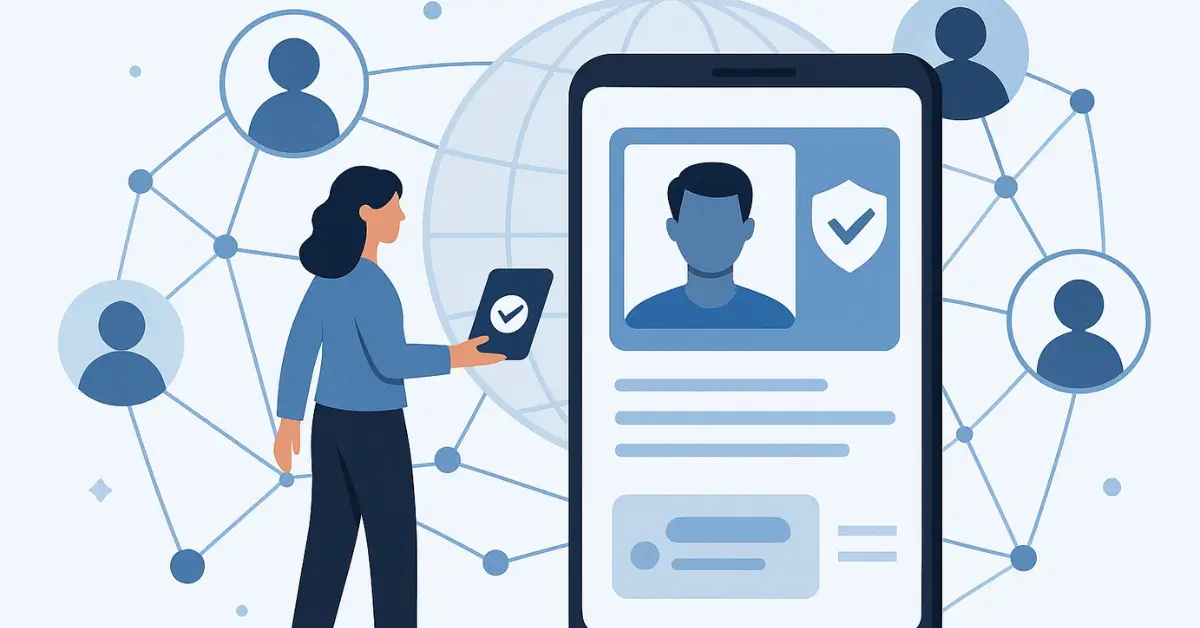
- What problem does Verify With EveryCred solve?
- What is EveryCRED in simple terms?
- How does EveryCRED build a borderless trust network?
- Borderless trust vs. traditional verification (table)
- How does the borderless trust network actually work?
- How does this increase user trust and brand transparency?
- What are cross-border use cases?
- Why unified trust ecosystems don’t exist today
- How a borderless trust network protects privacy and compliance
- The Verify With EveryCred user journey
- Key capabilities of EveryCRED that enable borderless trust
- Industry snapshots: where borderless trust matters most
- Future of cross-border trust


Verify With EveryCred is a campaign story about how EveryCRED turns fragmented, local credential checks into a single borderless trust network that anyone can verify in one click. The blog should show how digital, tamper-proof credentials rebuild user trust and brand transparency across countries, industries, and platforms.
What problem does Verify With EveryCred solve?
Most organizations still verify credentials in silos: PDFs, emails, phone calls, and country-specific portals that do not talk to each other. This creates friction, fraud risk, and a poor user experience for people who live, learn, or work across borders.
A “borderless trust network” solves this by letting any trusted issuer create verifiable digital proof once, and letting verifiers check it instantly from anywhere, without re-onboarding the user or duplicating checks.
What is EveryCRED in simple terms?
EveryCRED is a digital credential platform that lets organizations issue, hold, and verify tamper-proof credentials using decentralized identity (DID) and verifiable credentials (VCs). It anchors these credentials on blockchain so that once issued, they are secure, transparent, and resistant to tampering.
EveryCRED’s EVRC method ties each credential to a unique decentralized identifier, so users truly own their digital identity while verifiers can trust what they see.
How does EveryCRED build a borderless trust network?
EveryCRED works like an acceptance network: any issuer can publish credentials, any holder can carry them, and any verifier can confirm them through a shared, standards-based trust layer. Because it follows W3C Verifiable Credentials and DID standards, those credentials can move across systems, countries, and industries without custom integrations each time.
Public verifiers and one-click verification flows (via ID or QR) turn this trust layer into a practical, everyday experience for both consumers and enterprises.
Borderless trust vs. traditional verification (table)
| Aspect | Traditional verification | EveryCRED borderless trust network |
|---|---|---|
| Credential format | PDFs, scans, emails, local databases | Standardized verifiable credentials (VCs) |
| Trust model | Manual checks with each issuer | Shared trust anchored on DIDs and blockchain |
| Geography | Local or national silos | Cross-border by design, network-wide |
| Verification effort | Calls, emails, delays, paperwork | One-click / QR verification in seconds |
| User control | Issuer- or system-owned records | User-controlled identity and credentials |
| Fraud resistance | Easy to forge documents | Tamper-evident, cryptographically signed |
How does the borderless trust network actually work?
At the core, EveryCRED uses three roles: issuers, holders, and verifiers connected through EVRC DIDs and public verifiers. Issuers (universities, employers, banks, governments) create signed digital credentials, holders store them in their preferred wallet or account, and verifiers confirm authenticity using EveryCRED’s verifier portal or APIs.
Blockchain and cryptography (e.g., SHA-256, ECDSA) ensure that if someone alters a credential, verification fails instantly, which is critical for cross-border scenarios where parties do not know each other.
How does this increase user trust and brand transparency?
Digital trust is now a brand differentiator: consumers trust brands more when they are transparent about data, decisions, and verification processes. Verifiable credentials make that transparency tangible by letting brands prove claims (identity, licenses, training, audits) instead of asking users to “just believe” them.
Research on digital brand trust shows that clear, honest communication and verifiable practices drive stronger loyalty and resilience during crises, which aligns with what a borderless trust network delivers.
What are cross-border use cases?
- A nurse moving from India to Germany whose qualifications are verified in minutes instead of months using digital credentials.
- A gig worker proving identity, background, and skills across multiple platforms without re-uploading documents each time.
- A university issuing digital diplomas that employers worldwide can trust instantly.
- A fintech or marketplace verifying KYC and compliance documents without storing extra copies, reducing risk while increasing user trust.
Each story should show how fragmented verification used to work, then contrast it with a seamless EveryCRED flow across borders.
Why unified trust ecosystems don’t exist today
Most organizations still verify credentials with PDFs, emails, screenshots, and siloed databases that were never designed to work across borders. This patchwork makes it hard to trust documents at scale, slows down onboarding, and opens the door to fraud in hiring, education, and compliance workflows.
Each industry and country has its own portals, formats, and rules, so a credential that is valid in one system often has to be manually re-checked in another. A unified trust ecosystem has not emerged because there is no shared standard or network to connect issuers, holders, and verifiers globally, which is exactly the gap Verify With EveryCred is designed to close.
How a borderless trust network protects privacy and compliance
A borderless trust network only works if it respects local and global data protection laws while still allowing instant verification. Instead of passing copies of sensitive documents around, verifiable credentials let users prove facts with minimal, selective data sharing and clear consent.
By keeping credentials tamper-proof on secure infrastructure and checking revocation in real time, organizations can reduce redundant data storage and demonstrate privacy-by-design. This approach supports cross-border data transfers more safely because verifiers see only what they need, when they need it, and users stay in control of what is shared.
The Verify With EveryCred user journey
The Verify With EveryCred story is easiest to understand from one person’s point of view. A user receives a digital credential from a trusted issuer, stores it in a secure wallet or account they control, and then reuses it across borders whenever a new organization needs proof.
Instead of uploading the same documents again, the user simply shares a link, ID, or QR code generated by EveryCRED, and the verifier checks authenticity in seconds. The experience feels like logging in with a single, portable identity layer, but under the hood it is powered by verifiable credentials, decentralized identifiers, and a shared trust method.
Key capabilities of EveryCRED that enable borderless trust
EveryCRED provides the technical backbone that turns the idea of a borderless trust network into something practical. It uses verifiable credentials tied to its EVRC decentralized identity method so that every credential is cryptographically signed, tamper-evident, and easy to verify.
On the product side, EveryCRED supports many credential types (IDs, degrees, contracts, supply-chain documents), offers public and white-label verifiers, and integrates through APIs and SDKs. Features like on-chain revocation checks, selective disclosure, and standards compliance make it possible for different industries and jurisdictions to trust the same digital proof without custom rebuilds each time.
Industry snapshots: where borderless trust matters most
- Education: Universities issue digital diplomas and transcripts that graduates can share globally with employers or immigration authorities, ending manual email verifications.
- Workforce and HR: Employers verify skills, experience, and licenses in minutes, even when candidates have worked across multiple countries and platforms.
- Finance and fintech: Banks and fintechs check KYC and compliance credentials with one-click verification instead of collecting repeated copies of identity documents.
- Supply chain and commerce: Brands prove product origin, certifications, and audit reports as verifiable credentials, increasing transparency for regulators and customers.
Future of cross-border trust
A future-facing section positions Verify With EveryCred as part of a larger movement toward interoperable digital identity. Governments, standards bodies, and platforms are converging on verifiable credentials and decentralized identifiers as the common language for trust across borders.
In this world, people and organizations carry a portable, privacy-preserving trust layer that works with wallets, government IDs, and industry platforms alike. Verify With EveryCred shows how EveryCRED can be the connective tissue of that ecosystem linking issuers, holders, and verifiers into a network where trust is no longer limited by geography, file format, or legacy systems.
Fill the inquiry form to book a free demo with us.