3rd April, 2026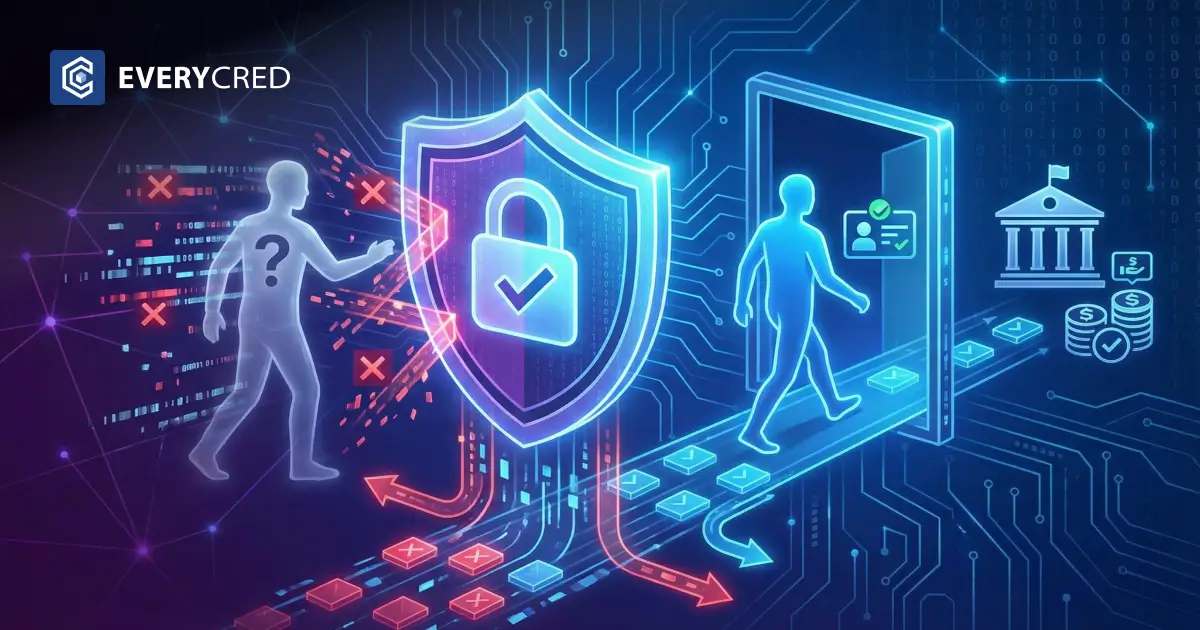
- The Ghost Beneficiary Problem Is Bigger Than Most Agencies Admit
- Why the Systems Built to Catch Fraud Keep Missing It
- What Digital Identity Verification Actually Means for Welfare Agencies
- Identity Proofing Software: What Government Procurement Teams Must Require
- How Verifiable Credentials Block Ghost Beneficiaries at Every Stage
- Real-Time Revocation Closes the Gap That Costs Agencies Millions
- EveryCRED Gives Welfare Agencies the Infrastructure to Act Now
- The Technology Is Ready. The Question Is Implementation.
- FAQs


Ghost beneficiaries are a direct and measurable financial threat to public welfare programs. They are fictional, deceased, or ineligible individuals who receive benefit payments because identity systems failed to catch them at enrollment. The U.S. federal government reported approximately $162 billion in improper payments across 68 programs in fiscal year 2024, according to the U.S. Government Accountability Office. A significant share of these losses originates from weak identity verification at the point of application.
Welfare agencies across the country are under increased pressure to modernize how they confirm who receives public funds. Digital identity verification gives agencies a technical, auditable, and scalable solution to this problem.
The Ghost Beneficiary Problem Is Bigger Than Most Agencies Admit
A ghost beneficiary enters a welfare system when the enrollment process cannot confirm that the applicant is a real, eligible, and living person. The problem takes several forms:
- Deceased individuals continuing to collect Social Security, Medicaid, or housing payments
- Synthetic identities combining real and fabricated personal data to pass manual document checks
- Individuals enrolling for the same program under different names across multiple states
- Fraudulent applicants using AI-generated or altered identity documents during the application process
Government benefits fraud offenses increased by 242% between fiscal years 2020 and 2024, according to the U.S. Sentencing Commission. That growth reflects a fraud environment that has outpaced the verification tools most agencies still use.
Why the Systems Built to Catch Fraud Keep Missing It
Legacy verification relies on methods that were designed for in-person, paper-based processes. They do not hold up against coordinated, technology-enabled fraud.
Static document checks accept flat images of government-issued IDs. These images can be altered using widely available software, and automated systems cannot reliably detect every manipulation.
Knowledge-based authentication asks applicants to answer security questions. Most answers are now available in breached databases or can be pieced together from public records, making this method unreliable as a primary fraud control.
Siloed state and federal databases do not communicate in real time. A fraudster can enroll the same synthetic identity across multiple state programs without triggering any alert because the systems never compare records.
Manual review processes cannot detect AI-generated deepfakes at scale. Human reviewers are also a bottleneck that slows down legitimate applications while still missing sophisticated fraud.
These structural failures create the environment that ghost beneficiaries exploit. Patching individual gaps is not effective. Agencies need a different verification architecture altogether.
What Digital Identity Verification Actually Means for Welfare Agencies
Digital identity verification is the process of confirming a person’s identity using cryptographic, biometric, and database-backed methods before granting access to government benefits. It replaces static document review with active, machine-verifiable proof.
In a working implementation, the process includes document validation with liveness detection, biometric matching to confirm physical presence, and cross-referencing identity attributes against authoritative government data sources. When agencies adopt verifiable credentials as part of this process, each enrolled beneficiary receives a cryptographically signed digital record tied to a Decentralized Identifier (DID). That record cannot be forged, duplicated, or transferred.
Every verification event is logged to an immutable audit trail. This gives agencies the evidence base they need for compliance reporting, post-fraud investigation, and eligibility redetermination.
Identity Proofing Software: What Government Procurement Teams Must Require
Identity proofing software is the core technology that performs verification before enrollment or disbursement. For welfare agencies, the selection criteria must go beyond basic document scanning.
NIST SP 800-63-4 Alignment
NIST released the final version of its Digital Identity Guidelines, SP 800-63-4, in August 2025. These guidelines define the Identity Assurance Levels (IAL1 through IAL3) that government programs must meet. IAL2 is the required baseline for systems handling sensitive welfare benefits. The updated guidelines formally recognize verifiable credentials and mobile driver’s licenses as valid high-assurance proofing methods. Any identity proofing software evaluated for welfare agency use must meet these standards. Read EveryCRED’s government implementation checklist for a detailed breakdown of what compliance requires at the technical level.
Cross-Agency Interoperability
Identity proofing software must operate on open W3C standards for verifiable credentials. This allows a credential verified by one agency to be accepted by another without redundant checks. The “verify once, trust everywhere” model reduces administrative overhead and eliminates the siloed data gaps that ghost beneficiaries currently exploit.
Privacy-by-Design Data Handling
Agencies must collect only the minimum data required to make a verification decision. Storing full personally identifiable information creates liability. Modern identity proofing software uses Zero-Knowledge Proofs (ZKPs) to confirm specific eligibility attributes, such as income thresholds or residency, without exposing underlying personal data.
For a detailed look at the technical requirements procurement teams should specify, review EveryCRED’s guide on identity proofing for government onboarding.
How Verifiable Credentials Block Ghost Beneficiaries at Every Stage
Verifiable credentials eliminate the conditions that allow ghost beneficiaries to exist. Each credential is cryptographically signed by an issuing authority and anchored to a blockchain. It contains mathematical proof of its origin and the identity of the holder.
For welfare programs, the workflow operates as follows:
- The agency issues a verifiable credential confirming the citizen’s eligibility status after successful identity proofing
- The citizen stores the credential in a secure digital identity wallet
- Each time the citizen accesses services, the system verifies the credential signature against the blockchain in real time
- If the beneficiary’s status changes, the issuing agency revokes the credential instantly
- Revocation propagates across all connected systems immediately, with no lag
A ghost beneficiary cannot pass this process because a synthetic or stolen identity cannot produce a valid cryptographic signature from a trusted issuing authority. The fraud is blocked at enrollment, not detected months later during an audit.
Real-Time Revocation Closes the Gap That Costs Agencies Millions
One of the most expensive welfare fraud patterns involves beneficiaries who were once eligible but have since become ineligible due to death, change of income, or interstate relocation. Legacy systems continue payments until a manual review catches the discrepancy. That gap can last months or years.
Blockchain-backed verifiable credentials address this directly. When a case worker updates a beneficiary’s status in the agency’s system, the connected digital trust infrastructure revokes the corresponding credential immediately. All downstream verification points reflect the change in real time. There is no window for continued fraudulent payment.
EveryCRED Gives Welfare Agencies the Infrastructure to Act Now
EveryCRED is a digital trust platform built on W3C-compliant verifiable credentials and blockchain technology. It gives government agencies the full infrastructure to issue, verify, and revoke digital identity credentials aligned with NIST SP 800-63-4 requirements.
Key capabilities include:
- One-click digital identity verification for citizen enrollment and ongoing eligibility checks
- Real-time credential revocation tied directly to case management updates
- REST API integration with existing government IT systems, with no requirement to replace legacy infrastructure
- Cross-department interoperability so one verified identity serves multiple agency workflows
- Privacy-by-design architecture that minimizes data collection and reduces compliance risk
Welfare agencies looking to eliminate ghost beneficiaries and reduce improper payments can book a demo with the EveryCRED team to map out a deployment plan against their current infrastructure.
The Technology Is Ready. The Question Is Implementation.
Ghost beneficiaries persist because identity verification in welfare systems has not kept pace with fraud. Digital identity verification gives agencies the architecture to close that gap. Identity proofing software aligned with NIST SP 800-63-4 provides a clear compliance path. Verifiable credentials eliminate the structural conditions that allow fraudulent enrollments to go undetected.
The evidence of what modern digital identity infrastructure can prevent is well established. Agencies that act on it reduce fraud, reduce administrative costs, and restore the integrity of programs that exist to serve legitimate beneficiaries.
FAQs
What is digital identity verification in welfare programs?
It uses cryptographic credentials to confirm a beneficiary’s real identity before authorizing any government welfare payment.
How do ghost beneficiaries exploit welfare systems?
They use fake, stolen, or synthetic identities to fraudulently claim government benefits intended for legitimate recipients.
What is identity proofing software for government agencies?
It validates applicant identities using biometrics, verifiable credentials, and blockchain before granting access to government benefits.
Can verifiable credentials stop welfare fraud in real time?
Yes, cryptographically signed verifiable credentials instantly flag ineligible claims and revoke access when beneficiary status changes.
Is digital identity verification compliant with NIST standards?
NIST SP 800-63-4 endorses verifiable credentials and digital wallets as compliant identity proofing methods for government agencies.