23rd April, 2026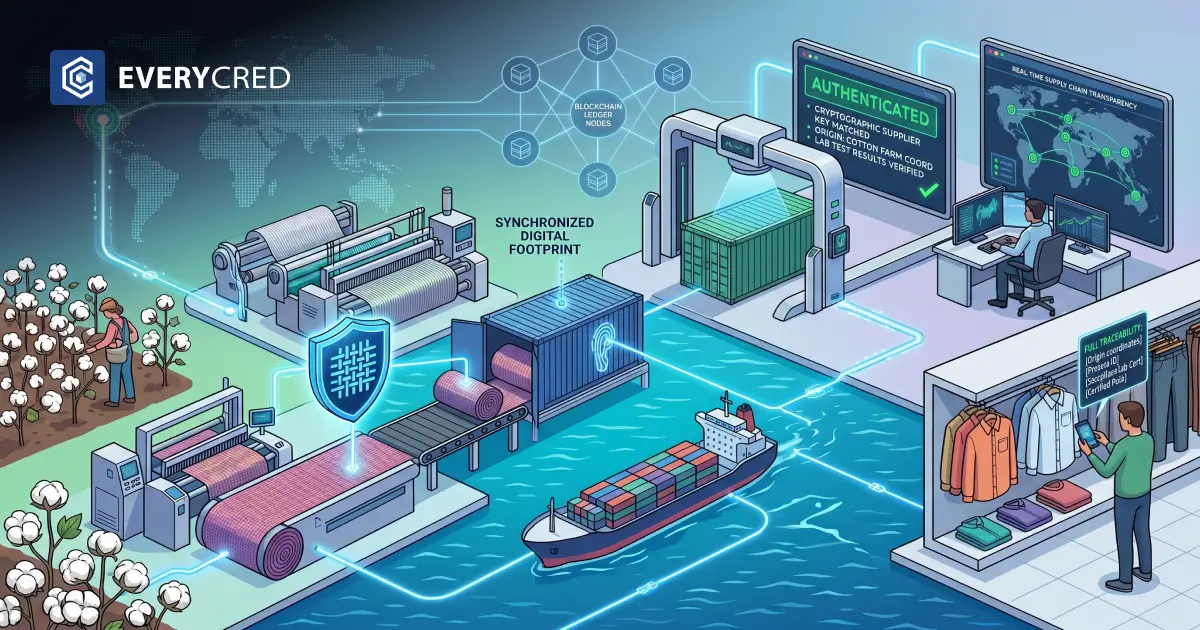
- Regulatory Agencies Face Increasing Scrutiny Over Supply Chain Blind Spots
- The Core Elements of Digital Government Solutions in Trade
- Blockchain Identity Verification Secures Import Credentials
- Phased Deployment of Digital Government Solutions
- Achieve Complete Textile Supply Transparency
- Secure the Future of Border Operations
- Conclusion
- FAQs


Textile regulators face a massive administrative challenge. Global supply chains lack visibility from the raw material source to the retail shelf. Regulatory bodies need accurate data to enforce trade laws and ensure textile supply transparency. Without this data, illegal materials enter domestic markets undetected. Digital government solutions offer a structural fix for these systemic vulnerabilities. This implementation guide details how public sector authorities deploy modern infrastructure to monitor textile imports securely.
Regulatory Agencies Face Increasing Scrutiny Over Supply Chain Blind Spots
Millions of tons of textiles cross international borders every week. Traditional paper documentation creates severe vulnerabilities in customs enforcement. Suppliers often alter origin certificates to bypass tariffs. Regulators lose visibility into the exact geographic origin of cotton, synthetic fibers, and finished garments. This lack of traceability leads to widespread noncompliance with domestic trade laws.
Government bodies are overhauling their import regulations to demand more data. The United States Department of Agriculture recently shifted its requirements through the Strengthening Organic Enforcement rule. This rule mandates fully electronic import certificates for organic goods entering the country. Paper trails fail the modern standard of proof. Regulators require robust technological systems for intercepting unethically sourced fabrics. Implementing strict digital verification protocols assists heavily in preventing textile fraud at ports of entry.
The Core Elements of Digital Government Solutions in Trade
Effective oversight requires real-time data exchange between international suppliers and domestic regulators. Digital government solutions provide this specific capability. They replace fragmented spreadsheets and physical stamps with unified reporting frameworks.
Standardized Data Reporting
Customs officials need immediate access to supplier data. Digital platforms standardize how manufacturers submit this information before shipments depart. Every shipping container receives a digital footprint containing laboratory test results and origin coordinates.
Automated Customs Authentication
Inspectors cannot manually open and verify every shipping container. Software automates the initial document verification process. The system flags irregularities automatically based on predefined regulatory criteria. This approach is essential for building digital trust ecosystems across international borders.
Cross-Border Data Synchronization
National systems must communicate with international export databases. Modern solutions utilize Application Programming Interfaces to pull data directly from foreign trade registries. This synchronization confirms that an export declaration matches the corresponding import declaration perfectly.
Blockchain Identity Verification Secures Import Credentials
Identity fraud drives a large percentage of illegal textile imports. Unregistered suppliers use fake company credentials to bypass trade restrictions. Blockchain identity verification solves this specific problem. It assigns a unique and mathematical identity to each approved manufacturer. Nobody can alter this identity after creation.
When a supplier submits an import certificate, the ledger verifies its authenticity mathematically. The National Institute of Standards and Technology emphasizes the need for advanced labeling strategies to close data gaps in textile traceability. Digital credentials meet this exact requirement. They link the physical product to an immutable digital record stored on a decentralized network. Regulators rely on cryptographically secure digital credentials to confirm supplier legitimacy without requiring physical audits.
How The Verification Protocol Operates
- Registration: The supplier registers their corporate entity with the regulatory body.
- Key Generation: The system issues a cryptographic key pair to the approved supplier.
- Document Signing: The supplier signs all export documentation with their private key.
- Customs Scanning: The border agent scans the digital document, and the blockchain confirms the signature matches the registered supplier.
Phased Deployment of Digital Government Solutions
Deploying a national traceability infrastructure requires methodical planning. Regulators must align technology with existing trade laws. The implementation relies on specific digital government solutions deployed in distinct phases to prevent supply chain disruption.
Phase One: Define the Regulatory Scope
Authorities identify high-risk textile categories first. They establish which exact data points suppliers must provide to gain entry. This includes farm-level origin coordinates, chemical composition reports, and labor certifications.
Phase Two: Integrate Existing Infrastructure
New systems must connect with the current port authority databases. Regulators require tools that integrate smoothly with existing manufacturer supply chain tracking software. This prevents suppliers from needing to enter the same data into multiple systems.
Phase Three: Deploy Immutable Ledgers
The government initiates the decentralized network. The system activates blockchain identity verification protocols for all incoming trade data. Regulators set up nodes to maintain the ledger’s integrity and monitor transactions in real time.
Phase Four: Mandatory Industry Compliance
Regulators announce a hard deadline for paper document phaseouts. All incoming shipments must carry a verified digital identity token. Shipments lacking this token face immediate rejection at the border.
Achieve Complete Textile Supply Transparency
A fully implemented digital tracking system changes border operations fundamentally. Manual audits decrease significantly. Automated scanners approve compliant shipments instantly. Bad actors cannot bypass the cryptographically locked ledger.
Real Time Origin Tracking
Agents see the exact origin of materials on their monitors. They view the entire custody chain from the agricultural producer to the final assembly facility.
Data-Driven Policy Decisions
Government agencies gather massive amounts of accurate trade data. They use this data to adjust tariffs, identify smuggling routes, and update domestic trade policies based on factual evidence.
Reduced Port Congestion
Fast mathematical authentication speeds up customs clearance. Legitimate trade moves faster through the ports. The system provides instant credential authentication for registered importers, reducing holding times and storage fees.
Secure the Future of Border Operations
Regulatory bodies need a reliable infrastructure to monitor global trade effectively. A fragmented approach leaves borders open to compliance failures and illegal imports. Implementing a scalable architecture ensures complete textile supply transparency for your jurisdiction. We design enterprise-grade government solutions that integrate directly into your oversight operations.
EveryCRED provides the technological foundation for immutable record-keeping at the national level. We deploy digital government solutions that give your agency total control over data authentication. Our platforms utilize advanced blockchain identity verification to eliminate document forgery entirely. We build systems that meet stringent federal compliance standards and handle high-volume port traffic. You gain clear, unquestionable visibility into every textile shipment entering your jurisdiction.
Conclusion
Paper-based trade enforcement is obsolete. Complex global supply chains demand mathematical certainty and immediate data access. Regulators must adopt digital tracking frameworks to maintain oversight and enforce the law. Upgrading to decentralized verification networks eliminates blind spots in the import process. This technological transition secures international trade, blocks illicit materials, and enforces domestic regulations effectively.
FAQs
What are digital government solutions for textiles?
They are centralized digital frameworks that allow regulatory bodies to authenticate fabric origins and monitor supply chain compliance instantly.
How does blockchain identity verification improve traceability?
It assigns an unalterable, cryptographically secured digital identity to suppliers, ensuring import documentation cannot be forged or manipulated.
Why do textile regulators need end-to-end traceability?
Regulators require full visibility to enforce import laws, verify ethical sourcing, and intercept counterfeit materials before they cross borders.
Can blockchain prevent textile supply chain fraud?
Yes. By decentralizing trust and utilizing immutable ledgers, blockchain makes it mathematically impossible for bad actors to alter transit records.
How is a digital credentialing system implemented for imports?
Regulators adopt API driven platforms that integrate with customs databases, allowing agents to instantly scan and verify supplier credentials automatically.